
Every engineer, architect, and building owner has heard the same claim by now: AI is about to change everything about how buildings get designed. However, most of what’s been written on the subject doesn’t hold up to scrutiny. It’s either vague enough to mean nothing or promotional enough to mean too much.
At Barton Associates, Inc., we take a different approach. This article is a clear-eyed account of where AI genuinely helps in MEP design today, where human judgment still can’t be replaced, and what that distinction means for the people responsible for the outcome.
Our perspective comes from decades spent in mechanical, electrical, and plumbing engineering, watching new tools and technologies enter the field, and asking the same question of each one: Does this hold up to the standard the work demands? This is what we’ve learned about where AI fits, and where it doesn’t.
Cutting Through the Hype: What AI Really Means for MEP
A grounded perspective from the engineers at Barton Associates, Inc.
AI is a genuinely useful tool in MEP design. However, it is not a substitute for engineering judgment, and conflating the two is where most of the current conversation goes wrong.
That value starts with speed and scale. AI tools can process design options, flag conflicts, and spot patterns faster than a person working manually. Where it can’t go is the judgment call: knowing when a design requirement should bend to a site condition it wasn’t trained on, or standing behind a stamped drawing.
That’s engineering work, not machine work, and it’s why the two are best positioned to work well together: AI providing the speed, engineers providing the judgment. That partnership (speed from the tool, judgment from the engineer) is worth keeping in view as the rest of this conversation unfolds.
“The real opportunity is using AI to remove the work that doesn’t require an engineer’s judgment, so our people can focus on the problems that do. It also gives us a new way to leverage decades of Barton’s project data and experience, allowing us to make decisions based on a much broader body of evidence rather than simply relying on the information in front of us today. AI doesn’t replace engineering judgment. It gives our engineers better access to the decades of knowledge behind that judgment.”
Where AI Genuinely Helps in MEP Engineering Today
Benefits & Use Cases
That partnership looks different task by task. Here’s where it’s already delivering real, concrete value in MEP design, with fewer errors, faster iteration, and better-performing buildings.

Streamlining Documentation and Everyday Tasks
Beyond design decisions, AI is quietly reshaping the everyday workload: drafting specifications, running quantity takeoffs, reviewing drawings, and searching project documentation. None of it is glamorous. All of it frees engineers from repetitive work, so more of their time goes toward actual engineering.
Generative Design for Early Ideation
Generative tools can explore dozens of MEP routing and layout options or lighting visualizations in a fraction of the time manual iteration takes, giving engineers a stronger starting point in early-stage design. Specialty-trained models can go further and produce fully developed design sets, but that level of generation is resource-intensive, and at this stage in a project, an engineer working through the options directly is usually the more practical path. Either way, every option still needs an engineer’s eye before it becomes something buildable.
More Efficient Energy Modeling and Load Calculations
AI-driven analysis tests far more design permutations than manual modeling allows, and does it faster. A recent peer-reviewed study in Nature Communications found AI has real, measurable potential to reduce energy consumption and carbon emissions in commercial buildings. More options explored early means more chances to find the efficient path before it’s locked in. If your goal is long-term building performance, that speed translates directly into lower-consuming systems, not just quicker deliverables.
BIM Clash Detection and Coordination
AI-assisted clash detection catches conflicts between ductwork, piping, conduit, and structure before they reach the field. Poor coordination is a well-documented industry problem: McKinsey Global Institute research has found that large construction projects typically take 20 percent longer to finish and run up to 80 percent over budget, in large part due to breakdowns in project management and design coordination. Catching a clash in the model rather than on-site is a fraction of that cost. Newer tools go further, prioritizing which clashes actually matter and suggesting fixes. It’s a coordination advantage, not a coordination decision.
Automated Code and Rule-Based Compliance Checks
AI can check a design against a fixed rule set far faster than a manual review ever could, flagging likely code issues early. But keep in mind that flagging isn’t interpreting. Codes require judgment calls about intent, context, and jurisdiction that a rule engine can’t make. That interpretation stays with a licensed engineer.
Predictive Maintenance for Building Systems
AI analysis of operational data can flag equipment issues before they become failures, extending a design’s value well past occupancy. The U.S. Department of Energy’s own fault detection and diagnostics research is built on exactly this premise: Catching HVAC faults early protects both performance and energy use. Of course, long-term performance has always mattered. What’s changed is the improved ability to catch a developing problem before it shows up as a failure, rather than after.
How AI Is Already Being Used Across the Industry
AI in MEP engineering isn’t a future concept. Adoption across the broader AEC industry is already underway, and the research backs that up:
- A peer-reviewed review in the Journal of Building Engineering confirms AI is already being used for generative design, automated clash detection, energy optimization, code compliance checks, and predictive maintenance.
- A systematic review published in the Journal of Engineering, Project, and Production Management found that construction still lags other industries in putting AI to use, with the strongest gains so far in cost estimation and scheduling rather than design coordination.
- A 2025 study on how construction professionals view AI found real enthusiasm for the technology, paired with real uncertainty about where it actually delivers today.
That gap between interest and proven results is worth taking seriously, not glossing over. A realistic understanding of what AI can and can’t do serves engineers, architects, and clients far better than hype.
The Risks, Considerations, and Challenges of AI in MEP
Faster energy models, sharper clash detection, and quicker compliance checks do not mean giving AI free rein. A responsible firm accounts for its limits as carefully as its strengths.
- Judgment and interpretation. AI can flag a likely code issue, but it can’t interpret intent, weigh context, or make the judgment call a licensed engineer is trained and licensed to make. Checking against a fixed rule set isn’t the same as understanding why the rule exists.
- Junior engineer development. AI is well-suited to the repetitive research that junior engineers have historically handled, but that does not mean it should replace them. Instead, firms can redirect this freed-up time to have junior engineers spend more time on-site and reviewing information to build real judgment.
- Accountability and liability. A stamped design carries professional and legal responsibility. That responsibility belongs to the engineer who signs it, not the tool that helped produce it.
- Over-reliance. Trusting an output without verifying it doesn’t remove human error from the process. It just moves the error further downstream, where it’s harder to catch.
- Data quality. AI is only as reliable as the data and models it works from. Bad inputs produce wrong — and often overconfident — outputs.
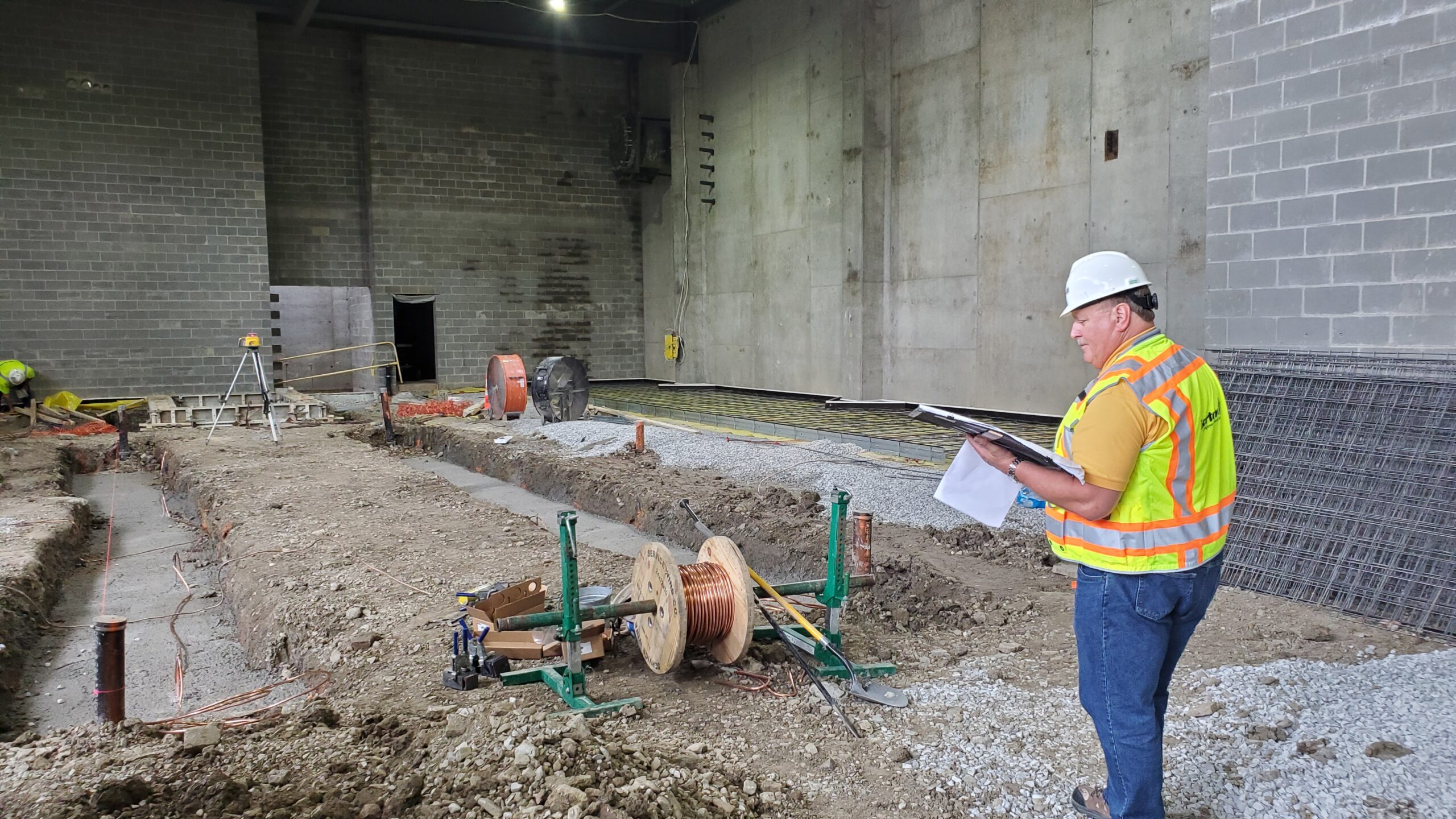
- Site reality. AI doesn’t walk a job site. It doesn’t see the field condition that doesn’t match the drawing.
These aren’t reasons to avoid the technology. They’re the reasons it’s vital for engineering judgment to lead it.
The Tools Will Keep Changing. The Standard Won’t.
AI is changing how MEP engineering gets done. It’s taking on the repetitive, error-prone work, freeing engineers to focus where their expertise matters most. What it isn’t doing is replacing the judgment, accountability, and hard-won expertise at the center of the profession, and that distinction isn’t going away as the tools improve. It’s the whole point.
At Barton, the standard we hold isn’t about which tools we use. It’s about how a system performs over time, and who stands behind that performance. If you’d like to talk through what that standard looks like on a real project, our human engineers welcome the conversation.